


Staying warm in winter isn't just about turning up the thermostat.
It's about creating the kind of warmth that actually lasts the deep, settled comfort you feel when you climb into a bed that's genuinely cosy. If you've been waking up cold at 3am or piling on blankets that still somehow leave you shivering, the problem probably isn't your heating. It's your bedding.
Here's how to stay warm in winter the right way in your bed.
Why You Feel So Cold at Night (Even With the Heating On)
Your body temperature naturally drops as you fall asleep, it's part of how your brain signals it's time to rest. The problem is that most bedding doesn't respond to that shift. Synthetic doonas trap heat unevenly, leaving you sweaty one moment and cold the next. And when the heating clicks off overnight, you feel it immediately.
The solution isn't more blankets. Instead, it's smarter bedding that regulates with you rather than against you.
The Rest of Your Bedroom Matters Too
Bedding aside, a few bedroom changes make a real difference to how warm you feel:
Draft-proof where you can. Cold air under doors and around windows drops room temperature fast. A simple door snake does more than you'd think.
Use a rug. Cold floors make cold rooms feel colder. A rug near the bed means your feet don't hit bare floorboards first thing in the morning.
Keep curtains closed after dark. Windows lose heat quickly overnight. Heavier curtains or lined blinds keep more warmth in the room.
Pre-warm the bed. A hot water bottle slipped under the covers 10 minutes before you get in makes climbing into bed feel like a reward rather than a shock.
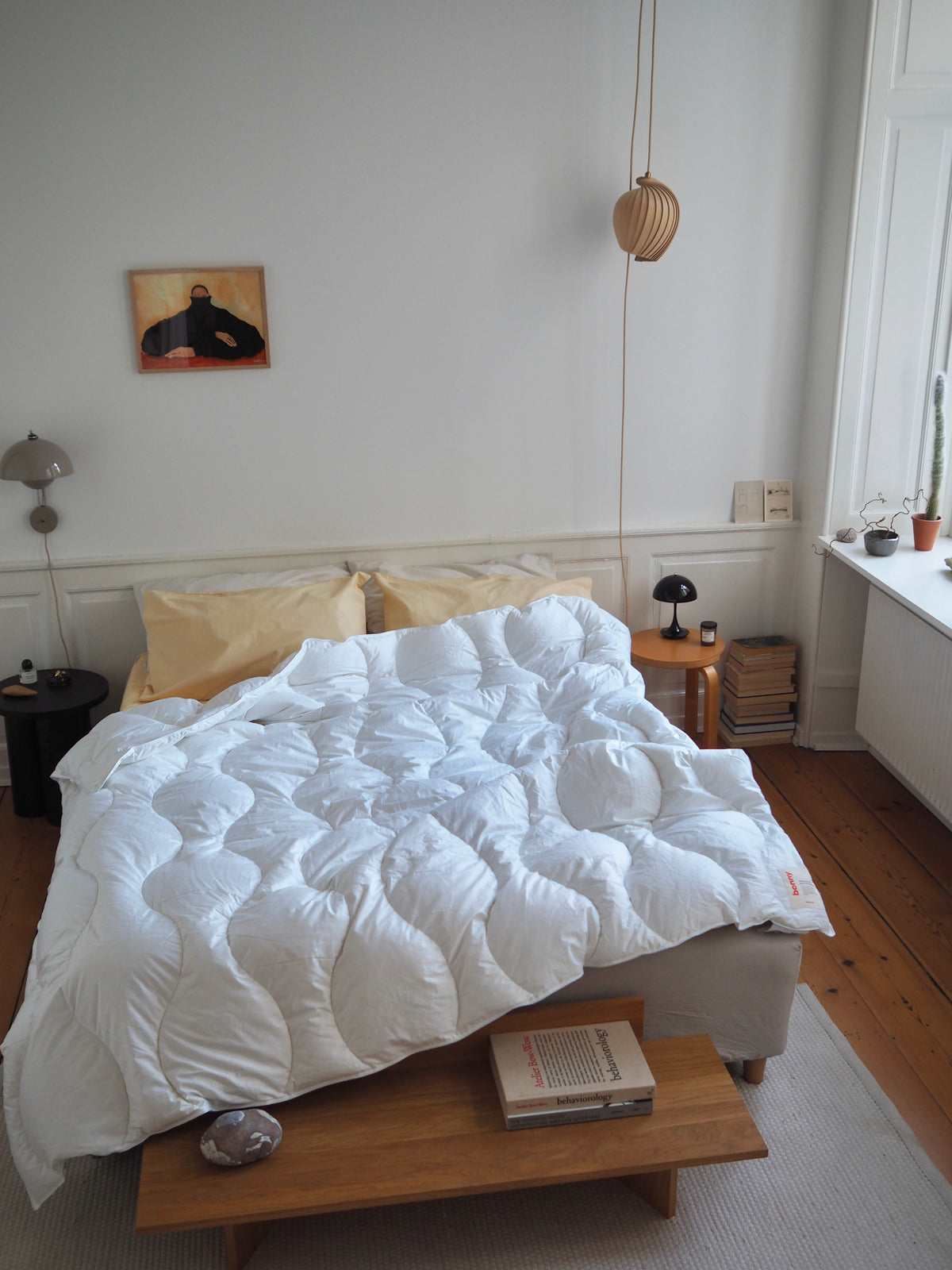

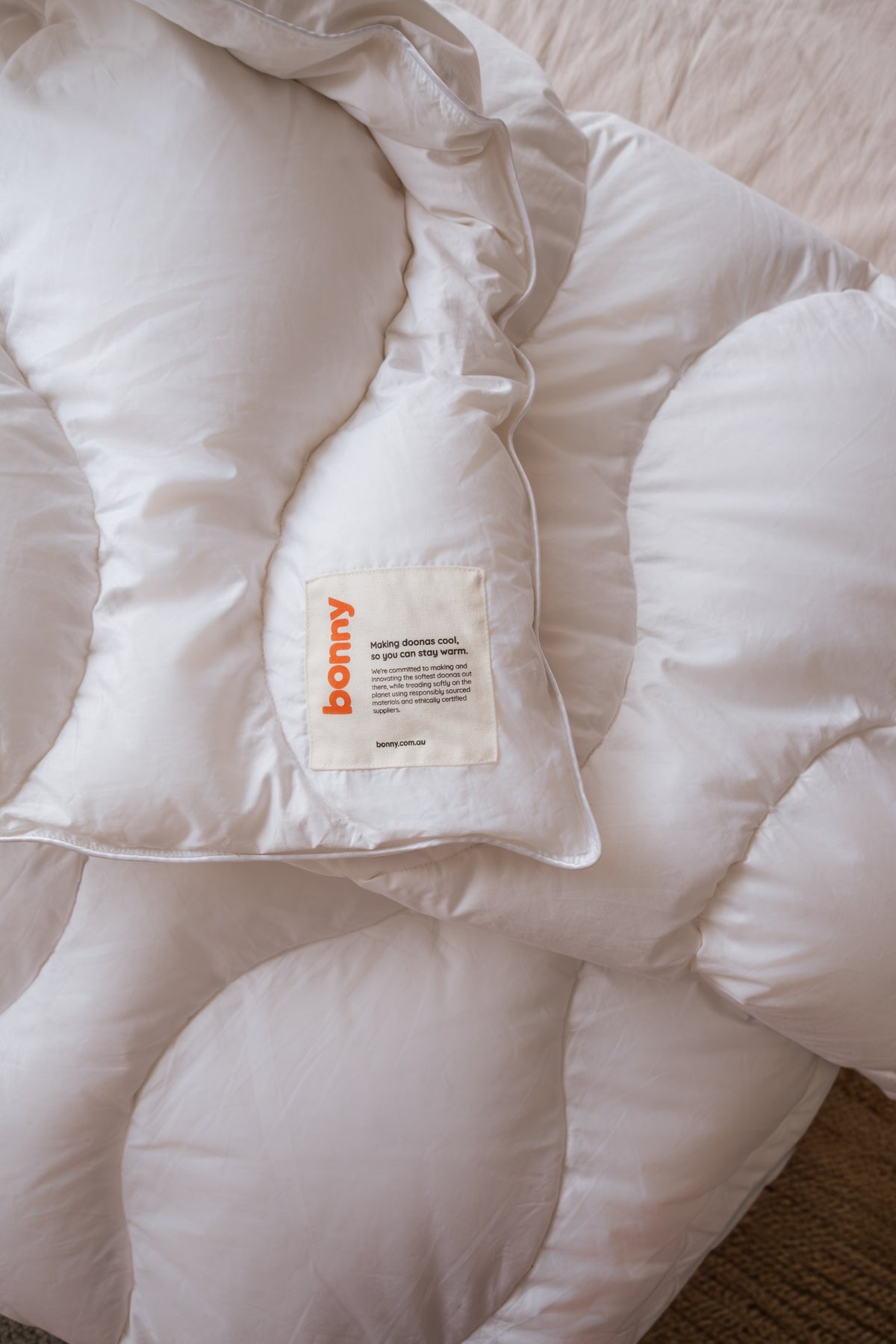
Start With Your Doona
Your body temperature naturally drops as you fall asleep, it's part of how your brain signals it's time to rest. The problem is that most bedding doesn't respond to that shift. Synthetic doonas trap heat unevenly, leaving you sweaty one moment and cold the next. And when the heating clicks off overnight, you feel it immediately.
The solution isn't more blankets. Instead, it's smarter bedding that regulates with you rather than against you.
Down vs Synthetic: Which Actually Keeps You Warmer?
Natural down (duck or goose) has a warmth-to-weight ratio that synthetic fill simply can't match. The clusters trap warm air close to your body while still allowing moisture to escape, so you stay warm without overheating. It's the same reason down has been used in cold climates for centuries.
Synthetic fill tends to be heavier, less breathable, and loses its loft faster over time. If you've ever woken up in the night feeling simultaneously hot and cold, a synthetic doona is likely the culprit.
At Bonny, our doonas use premium natural down fill specifically chosen for its ability to regulate temperature across the night — not just pile on warmth.
Small Habits That Make a Big Difference
Staying warm in winter is as much about routine as it is about products. A few things worth building in:
- Have a warm shower or bath about an hour before bed. The drop in body temperature afterwards actually signals to your brain it's time to sleep and you'll feel warmer getting into bed.
- Wear socks to bed. Sounds simple, but warming your feet helps your whole body feel warmer faster.
- Keep your bedroom slightly cooler than the rest of the house. It sounds counterintuitive, but a cool room with warm bedding leads to better, deeper sleep than a hot room with thin covers.
- Stay hydrated. Cold air is dry air, and dehydration makes you feel the cold more.
Layer Your Bed Like You Layer Your Outfit
The way you put a fitted sheet on matters more than most people realise. The most secure method:
-
Base:
A 100% organic cotton fitted sheet.
-
Middle
Your doona (hopefully a Bonny one!).
-
Top layer
A waffle knit blanket or chunky throw folded at the foot of the bed. Easy to pull up if you get cold, easy to kick off if you don't.
This approach gives you control. You're not stuck either sweating under a heavy doona or lying there cold because you've thrown it off.
Few household tasks inspire as much frustration as folding a fitted sheet. That elastic-edged, lumpy bundle has a way of defying every attempt to make it neat, leaving most of us shoving it into the linen cupboard and hoping for the best. But here's the thing: it doesn't have to be this way.
Learning how to fold a fitted sheet properly is one of those small life skills that makes a surprisingly big difference. Once you've got the technique down, you'll end up with smooth, compact squares that stack beautifully, save space, and make your linen cupboard look like something out of a magazine.
Why Fitted Sheets Are So Hard to Fold
The culprit is the elastic. Unlike a flat sheet, which lies perfectly square, a fitted sheet has curved, elasticised corners designed to grip your mattress, not to fold flat. That curve means you can't just lay it down and fold it in thirds like a bath towel.
The good news is that once you know the trick, tucking the corners into each other, everything clicks into place. You'll be left with a neat rectangle that folds down to a tidy square. Proper folding also means less creasing, easier storage, and a much more organised linen collection overall.


Step by Step Guide: The Easiest Way to Fold a Fitted Sheet
Follow these steps and you'll
have a perfectly folded fitted sheet in under two minutes.
-
Hold the sheet lengthways.
Stand up and hold the sheet by two of its short-end corners, one in each hand, with your hands inside the pockets of each corner.
-
Bring the corners together.
Bring your right hand to your left and tuck the right corner completely over the left corner, so one pocket sits neatly inside the other.
-
Repeat on the other end.
Drape the sheet over your left arm and pick up the two remaining corners on the other end. Tuck them together the same way, then bring both sets of tucked corners together so all four corners are nested inside one another.
-
Lay it on a flat surface.
Place the sheet down on a bed or table. You should have a rough curved shape, don't panic, this is normal.
-
Shape it into a rectangle.
Tuck the curved edges in and smooth the sheet into a long rectangle. Use your hands to flatten out any bunching.
-
Fold into thirds.
Fold the rectangle into thirds lengthways, then fold it in half or thirds again to create a neat, compact square.
-
Smooth and store.
Give the folded sheet a final smooth-over with your hands before storing and then pop a Bonny sheet belt around it. Voila!
Blue Sheets
Blue is one of the most popular colours for sleep spaces, and for good reason.
Why people love them:
- Naturally calming and easy on the eyes
- Pair beautifully with white, timber and neutral decor
- Feel fresh without being too much
Things to consider:
- Very bright blues can feel energising rather than restful
Darker blues, dusty tones and deep navies are generally the most sleep-friendly.


Dark Sheets
Dark sheets create an instant hotelstyle mood.
Why people love them:
- Luxurious and cocooning
- Hide stains and everyday marks
- Add contrast in light-filled rooms
Things to consider:
- Can make small or dark bedrooms feel a bit smaller (dark colours tend to do that)
- Show imperfections like lint and pet hair more easily
Dark tones work best when balanced with lighter walls or layers (like throws).


Choosing Bed Sheet Colours by Bedroom Style
Minimal or Modern Bedrooms
If your space is clean-lined and uncluttered, stick to:
- White or off-white
- Soft grey
- Warm stone or oat
These colours reinforce simplicity without feeling cold.
Warm and Earthy Bedrooms
For cosy, grounded spaces, look for:
- Beige and sand tones
- Olive or forest green
- Soft terracotta-adjacent neutrals
These colours layer beautifully with timber and natural fibres.
Coastal or Light-Filled Bedrooms
Coastal spaces suit:
- Crisp white
- Soft blues
- Pale neutrals
They reflect light and give off a breezy, relaxed feel.
Moody or Hotel-Style Bedrooms
If you love a dramatic, cocooning bedroom:
- Charcoal
- Navy
- Deep green
Choosing Bed Sheet Colours by Lifestyle
Kids and Pets
If you live with kids or pets, mid-tones are your friend. Soft greys, muted greens and warm neutrals hide everyday mess far better than bright white ever could. Paw prints, snack crumbs and the occasional mystery mark are simply less obvious. These shades also age more gracefully, holding their depth and character wash after wash. You still get a calm, elevated bedroom without feeling like you have to protect it.
They hide everyday mess better than white and age more gracefully & generously.
Hot Sleepers
If you tend to run warm at night, lighter colours can make a surprising difference visually (who would have thought). Crisp white, pale neutrals and soft blues reflect more light and create a fresher, airier feel in the room. While colour will not physically lower the temperature, it does influence mood and perception! Paired with breathable fabrics, lighter tones help your sleep space feel cleaner, cooler and more open.
Low-Maintenance Homes
For homes that value practicality, deeper neutrals are a good choice. Stone, grey and charcoal are forgiving between washes and tend to disguise minor creasing or marks also. They maintain their richness over time and still look intentional, even when the bed is not perfectly styled. It is an easy way to balance function and aesthetics without compromising on either.
Small or Large Bedrooms
Room size plays a bigger role than you might expect. In smaller bedrooms, lighter shades help open up the space by reflecting natural light and making walls feel further away. In larger rooms, darker tones can add intimacy and warmth, grounding the space and giving it a more considered, cocooned feel. The right colour does not just complement your room, it shapes how it feels to sleep in it.
Shop Australia's best doonas, quilts and duvets with Bonny.
There's a lot to consider when buying a new doona, duvet or quilt but at Bonny, we have made it easy. Choose your weight, choose your size and find it at your day. We have free 14 day returns - if you don't love it, don't keep it. We have over 100 five star reviews!


All Rounder
Versatile, cuddly, just right.